Proxy Exchange
Simplifying shareholder research and proxy voting
Proxy Exchange is one of ISS's flagship web-based platforms, helping institutional investors navigate complex company and shareholder meeting information, evaluate corporate governance proposals, and make informed proxy voting decisions. The platform brings together large volumes of research, meeting data, voting recommendations, and workflows that investors rely on to manage thousands of proxy votes each year.
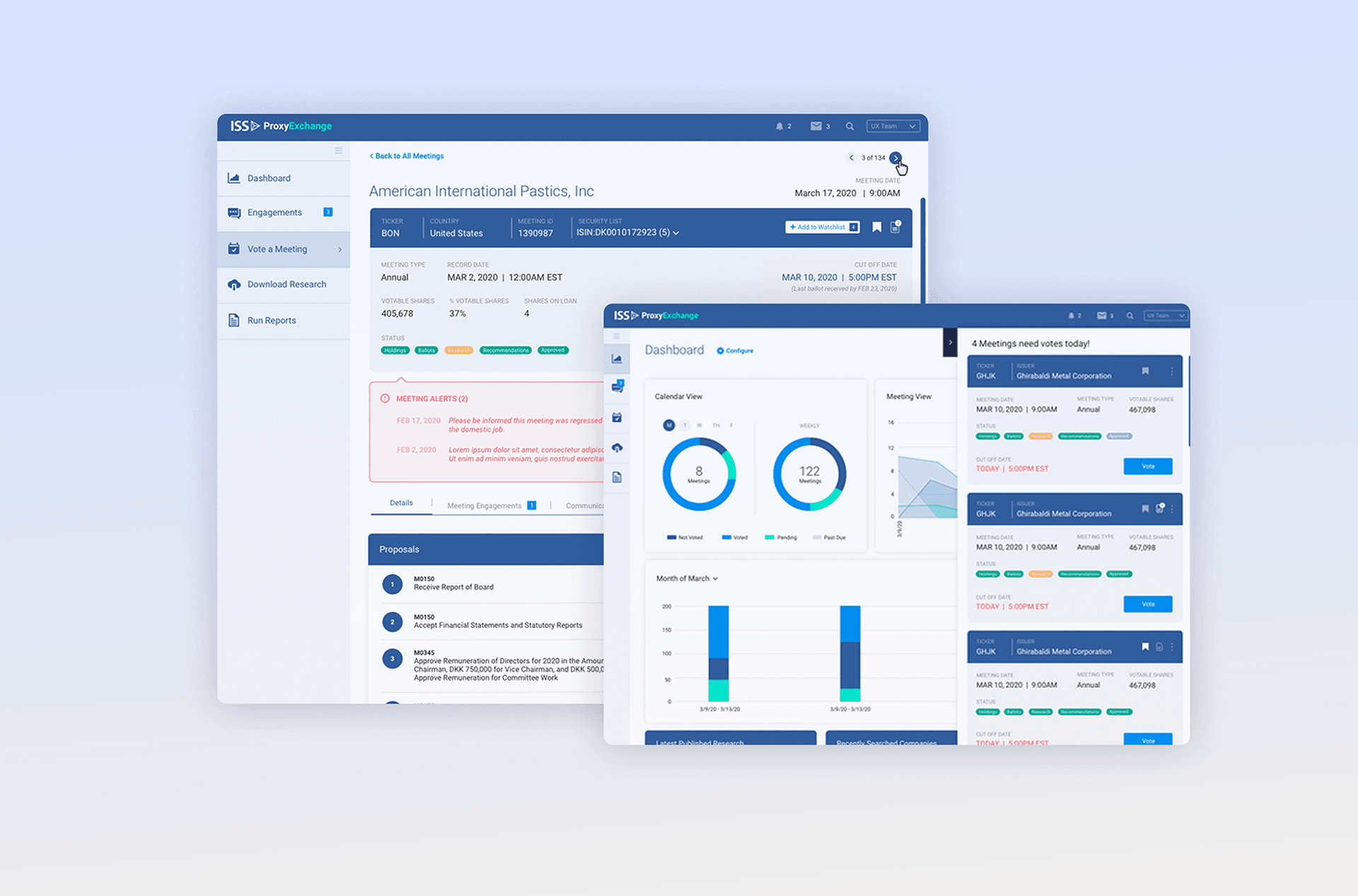
The existing proxy voting platform was outdated, difficult to navigate, and unnecessarily complex. Redundant information, a fragmented voting workflow, and a lack of clear hierarchy made it difficult for users to understand responsibilities, identify critical actions, and confidently complete time-sensitive voting tasks. The opportunity was to rethink the platform's structure, surface key insights more effectively, and create a more scalable experience while reducing the burden on client support teams.
The challenge wasn't simply modernizing an outdated interface—it was rethinking how a complex voting experience could become clearer, more intuitive, and easier to act on.
I led the vision and strategy for a reimagined proxy voting experience, combining heuristic analysis of the legacy platform with deep user insights from the Client Success team. I partnered closely with the team to deepen my understanding of user workflows, pain points, and opportunities for improvement. From there, I simplified the information architecture, introduced an analytics dashboard to surface key voting insights, and redesigned the application with a more modern UI/UX and interaction model. I streamlined the voting workflow with clearer entry points, guided steps, and progressive disclosure to reduce cognitive load and improve decision clarity. The majority of the design exploration and prototyping was done in wireframes, allowing me to iterate quickly and stay focused on structure, hierarchy, and workflow clarity. I also explored a small number of visual directions and color themes to help communicate the broader design vision. Finally, I built a robust end-to-end prototype to bring the vision to life, create alignment across stakeholders, and build the case for future roadmap investment.
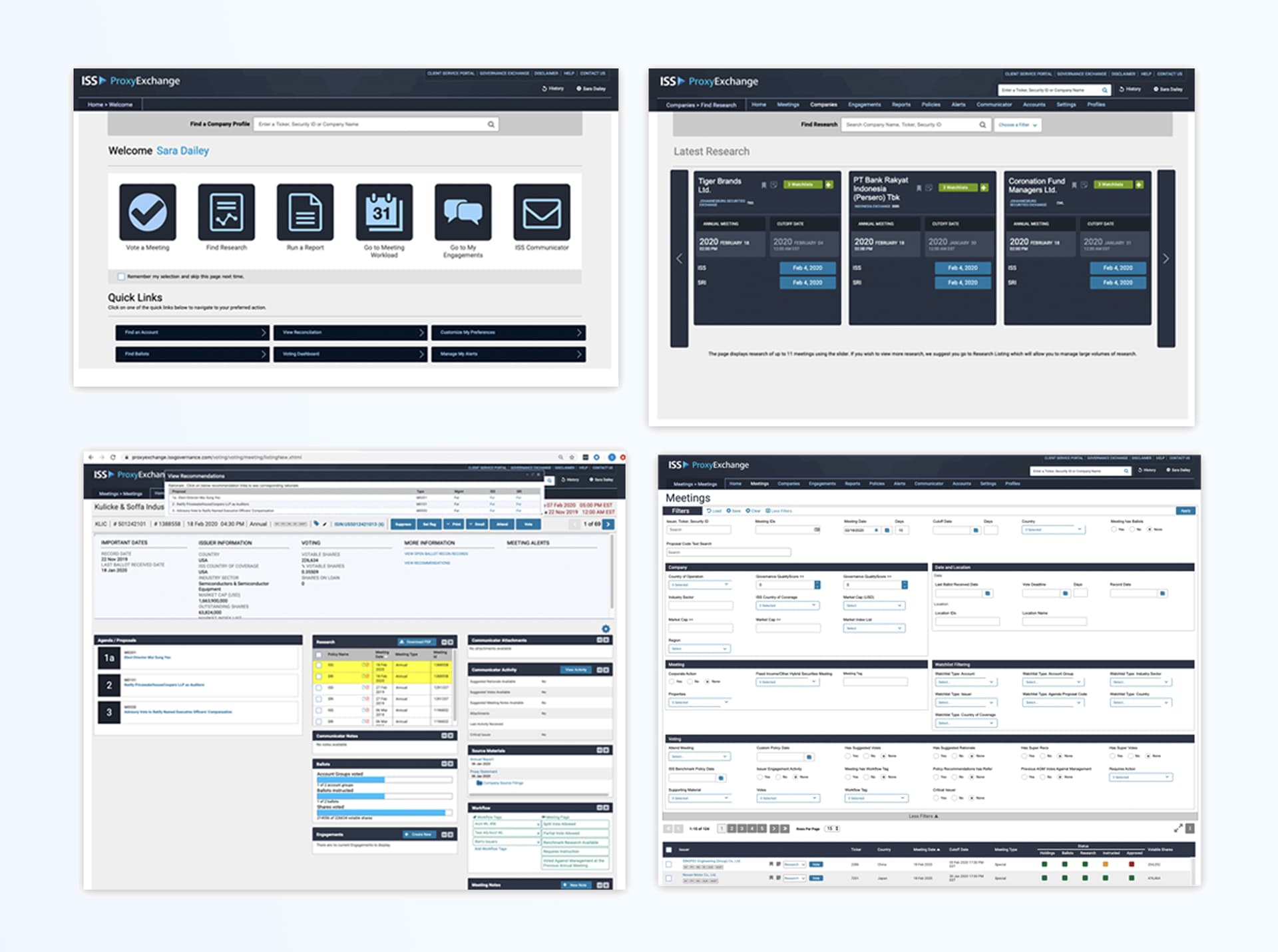
I did a complete audit, walkthrough, and workflow analysis of the legacy platform to understand where users experienced friction, where information was redundant or unclear, and where the platform could be simplified and improved.
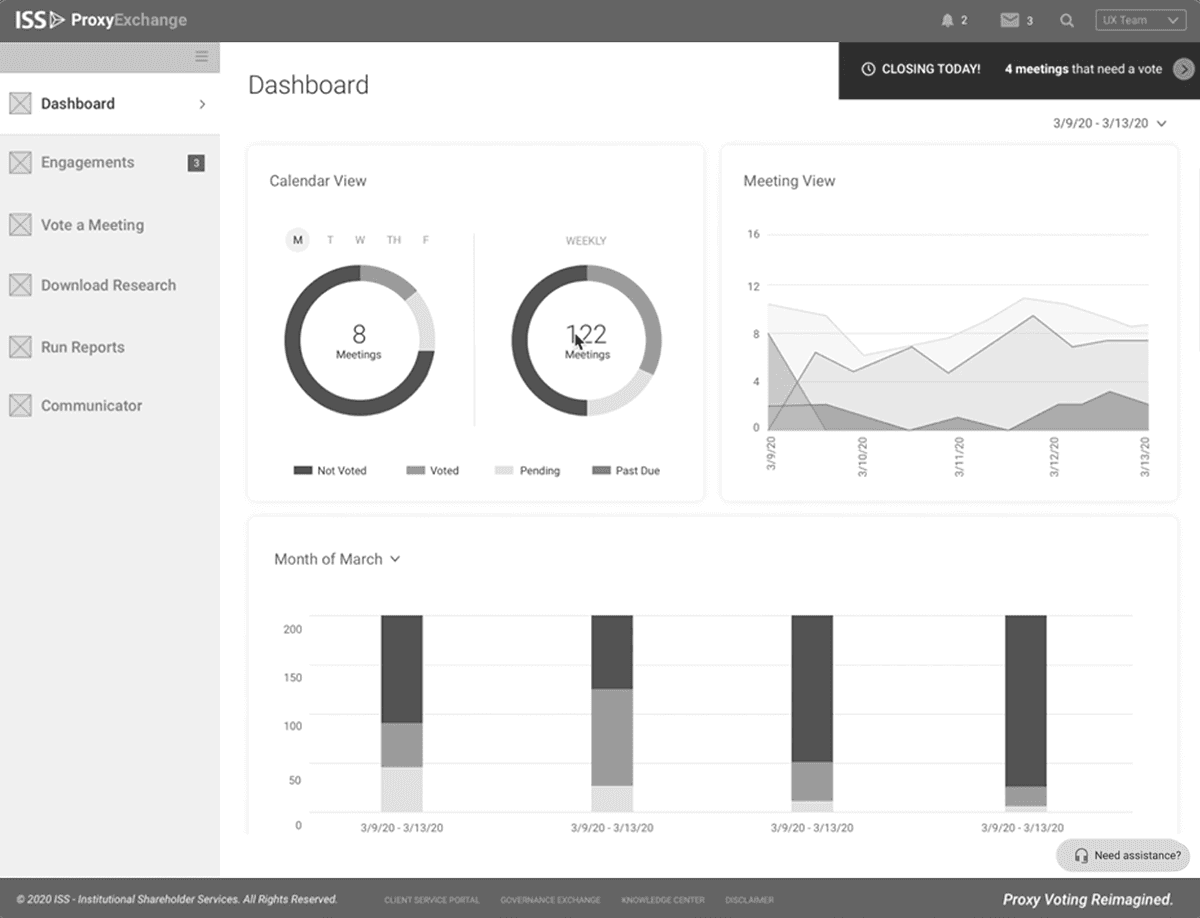
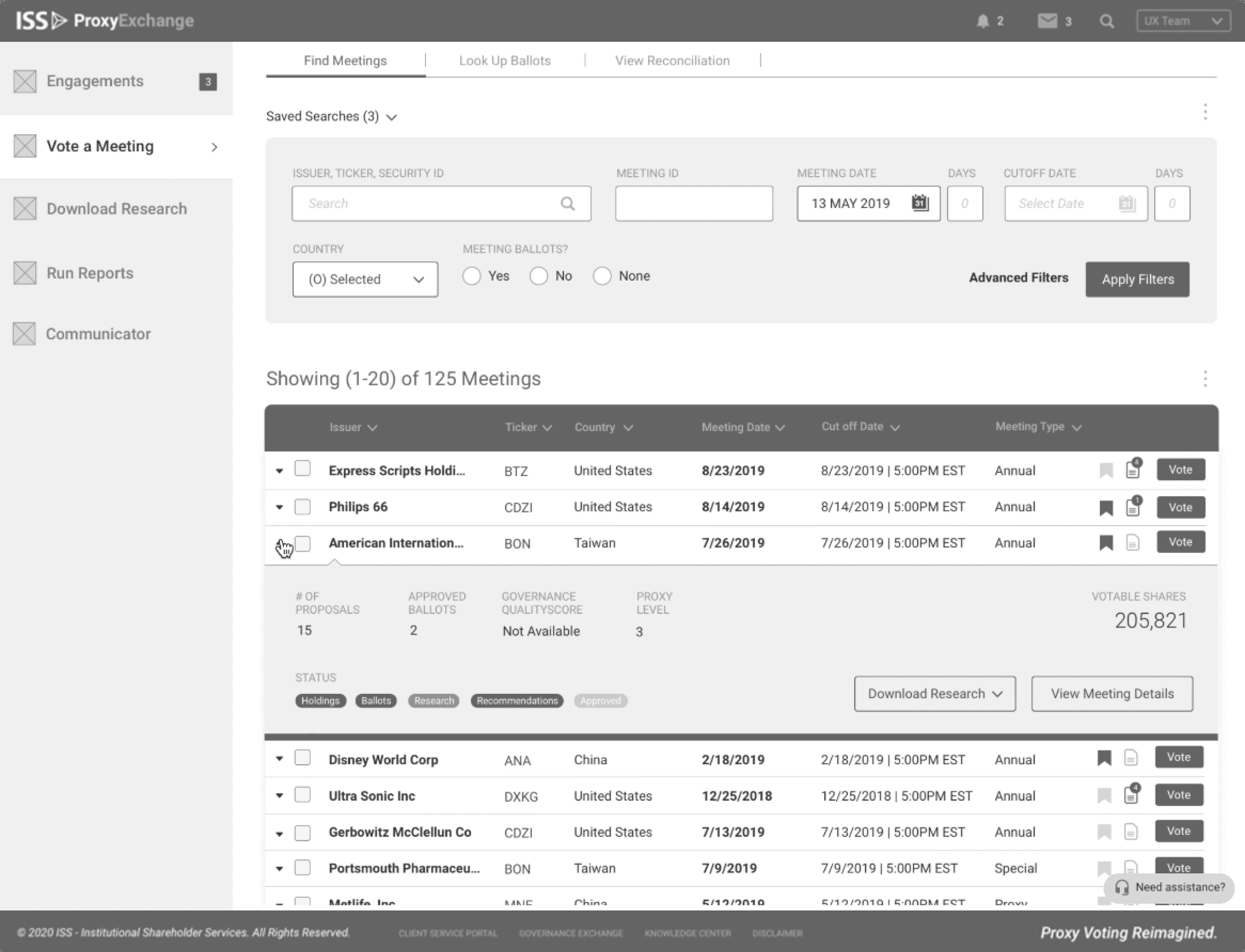
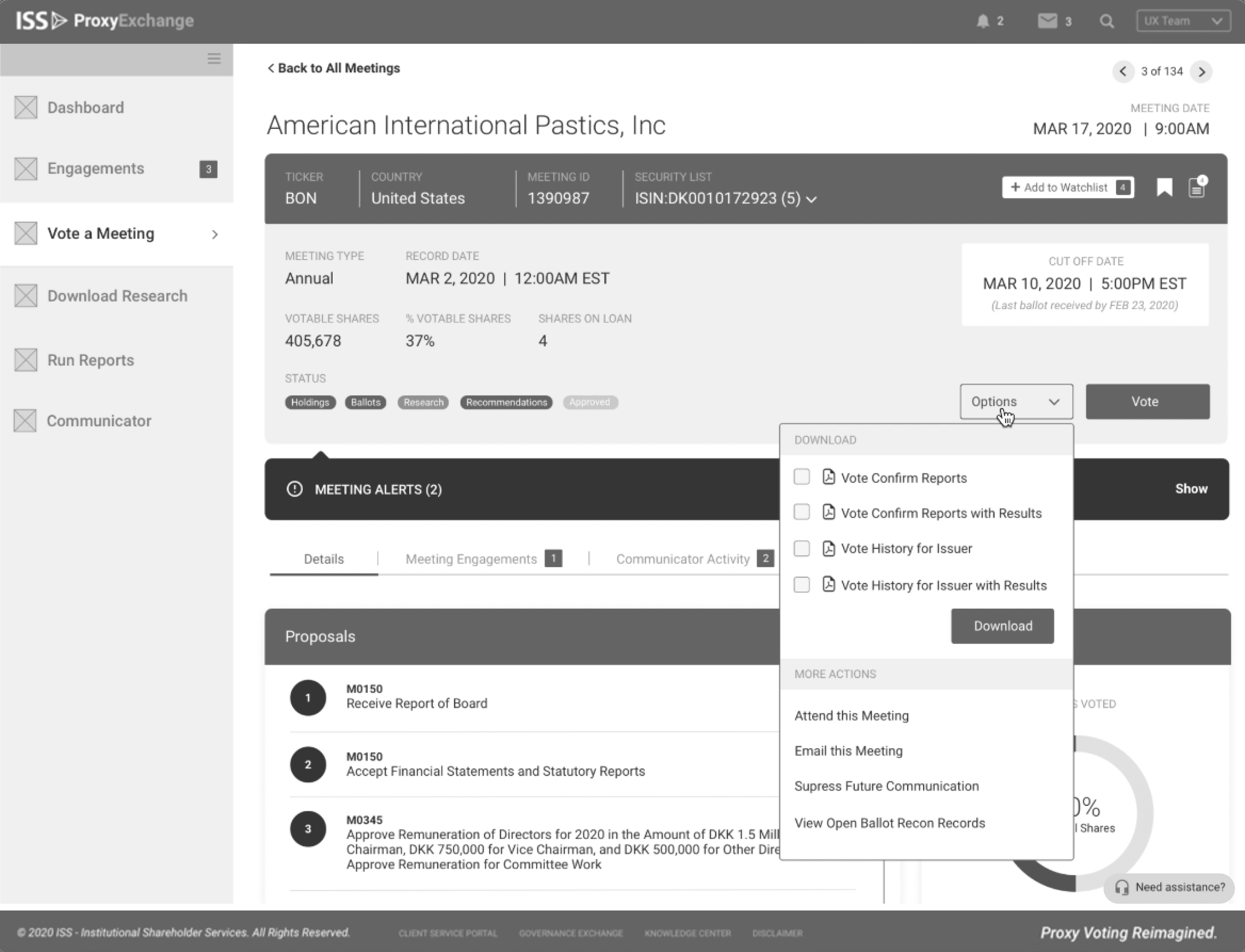
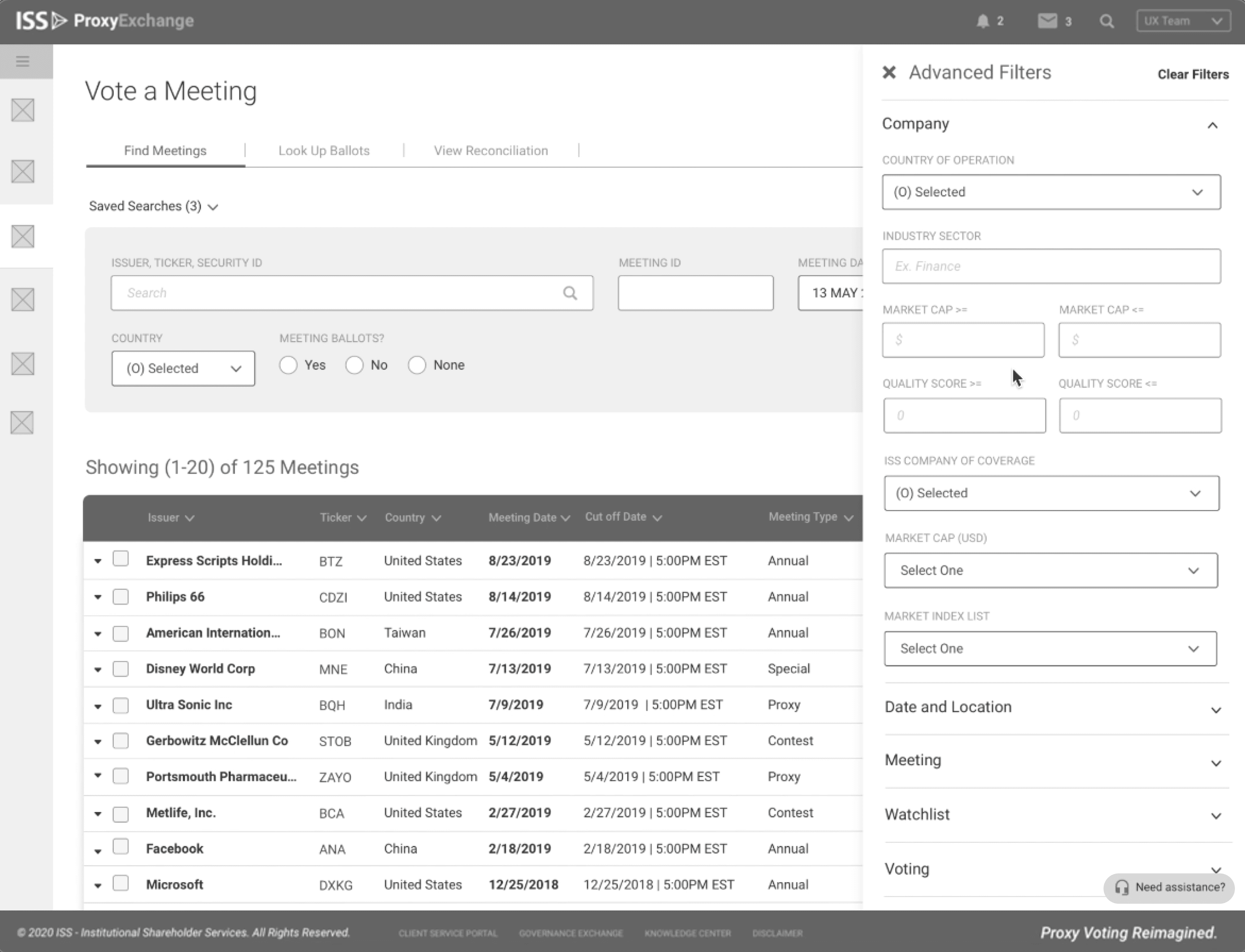
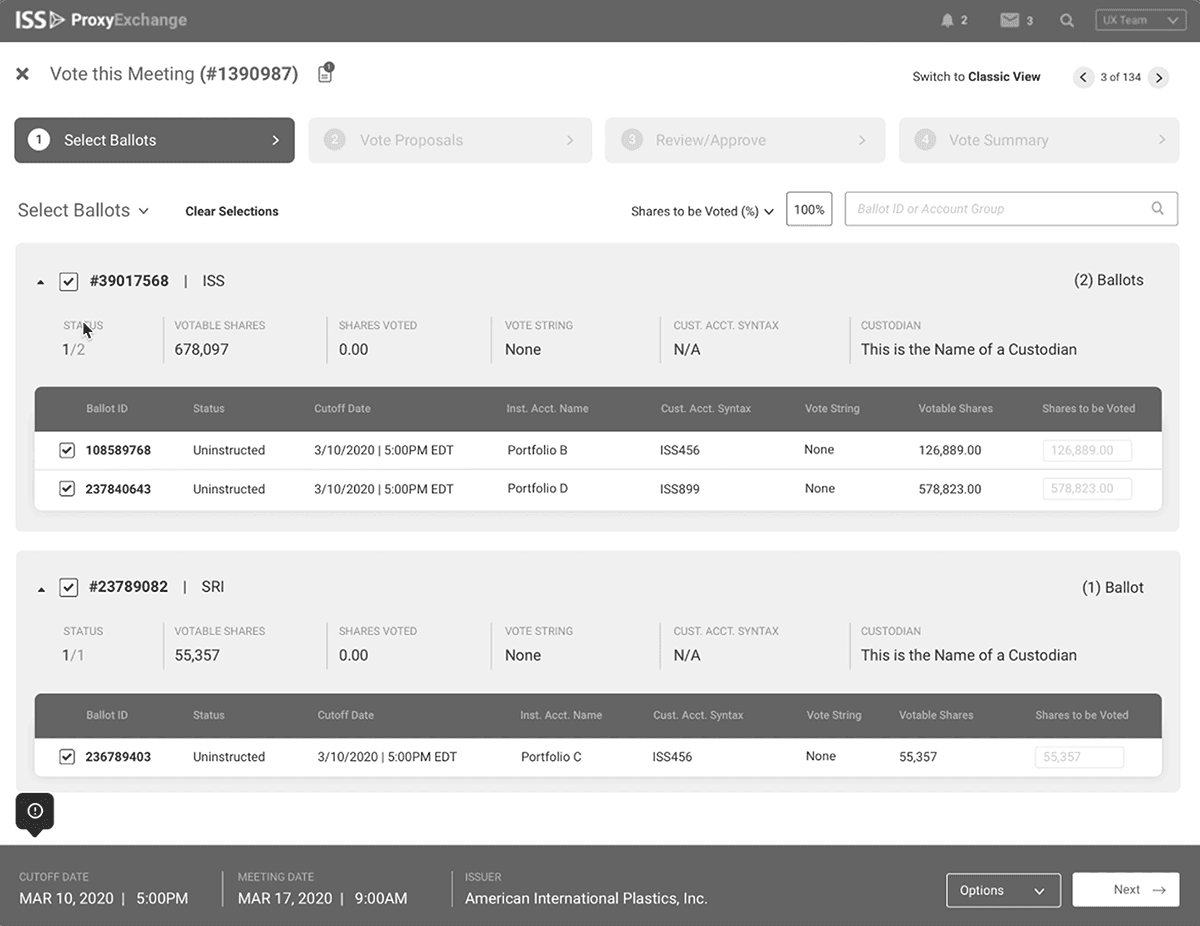
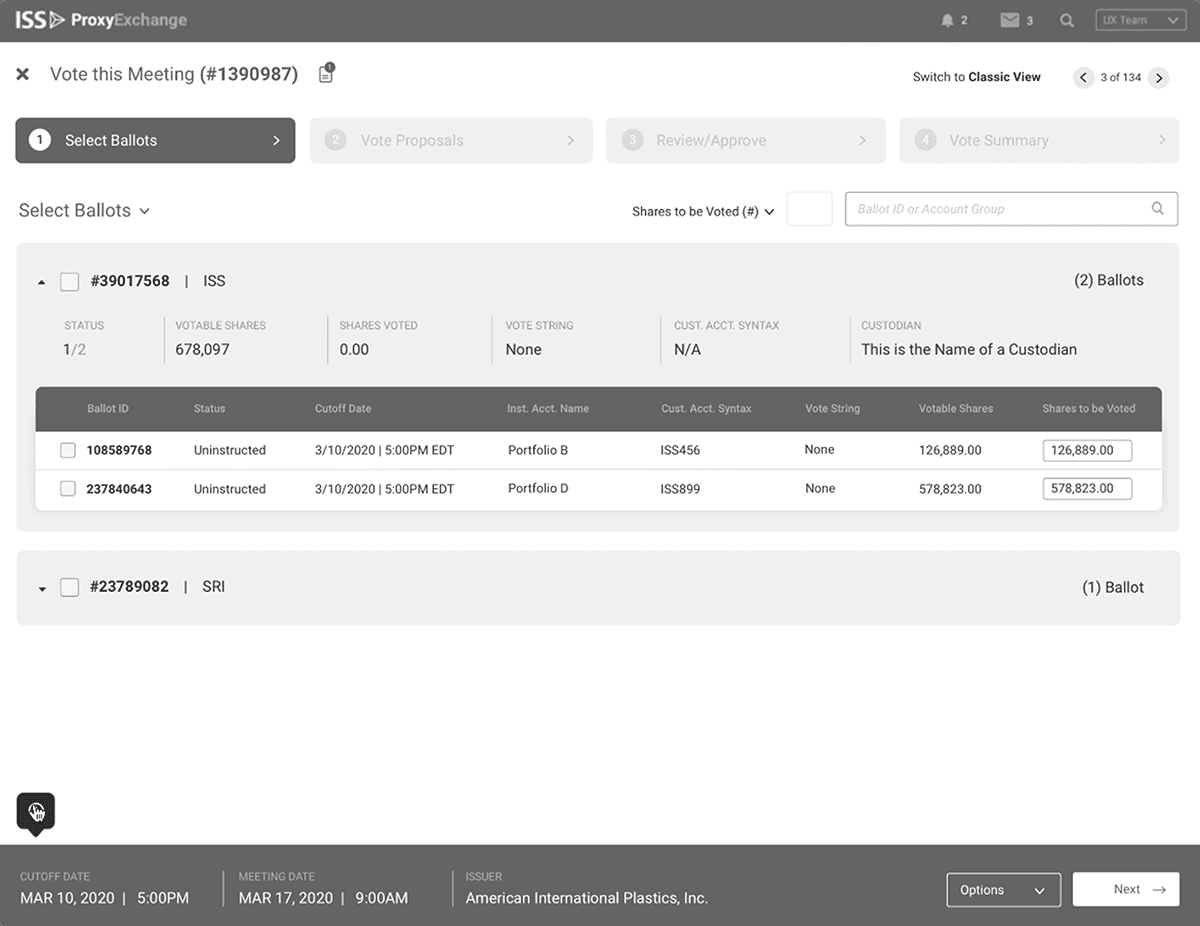
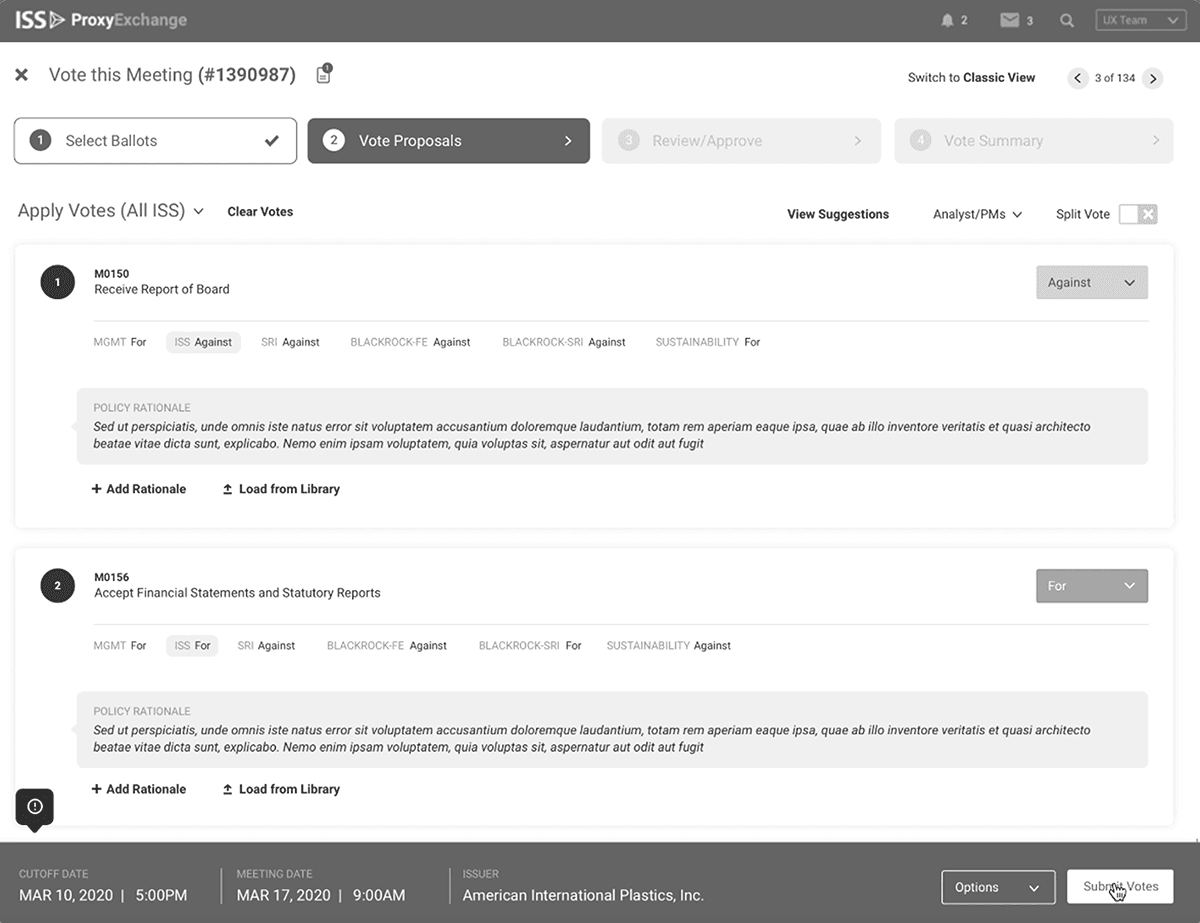
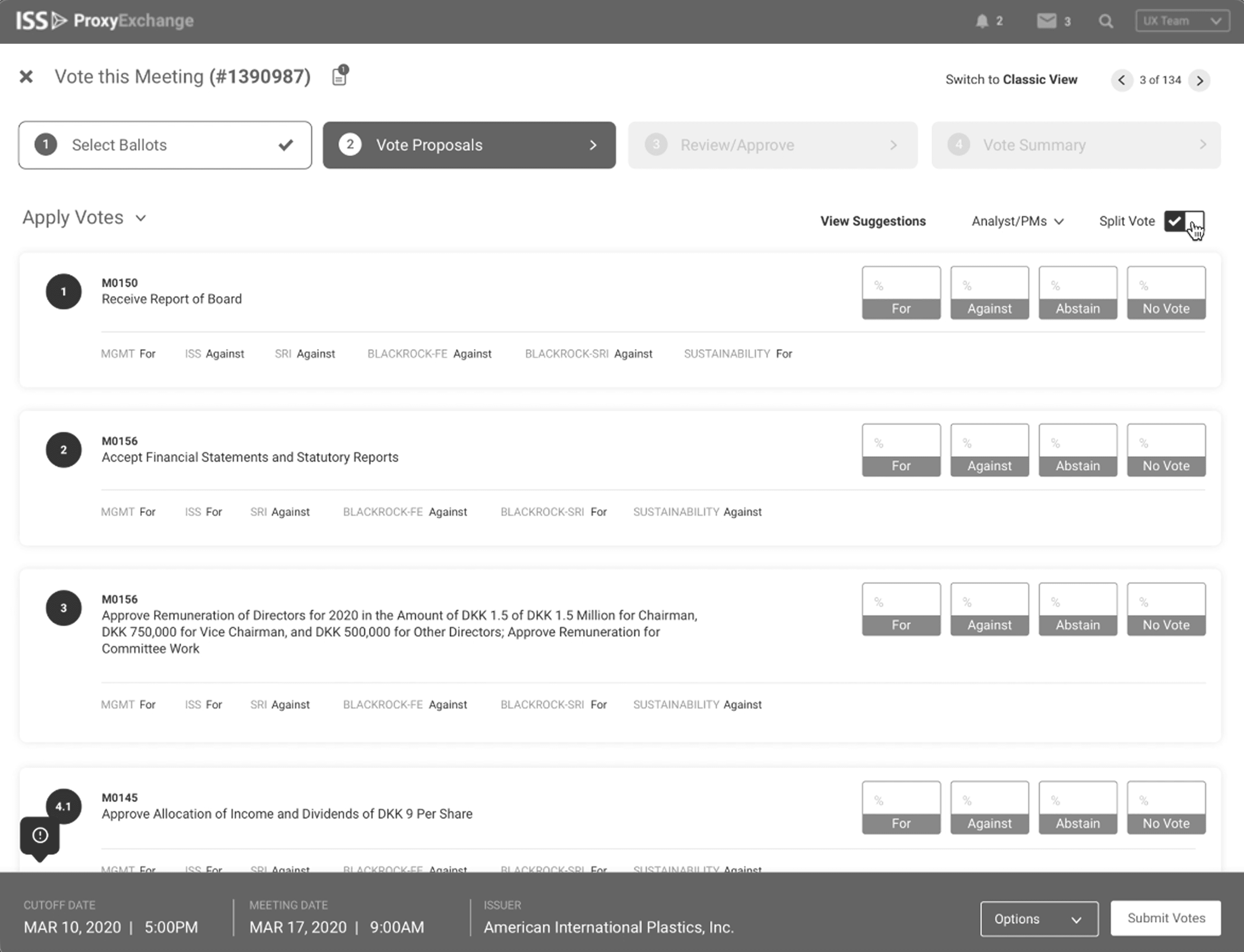
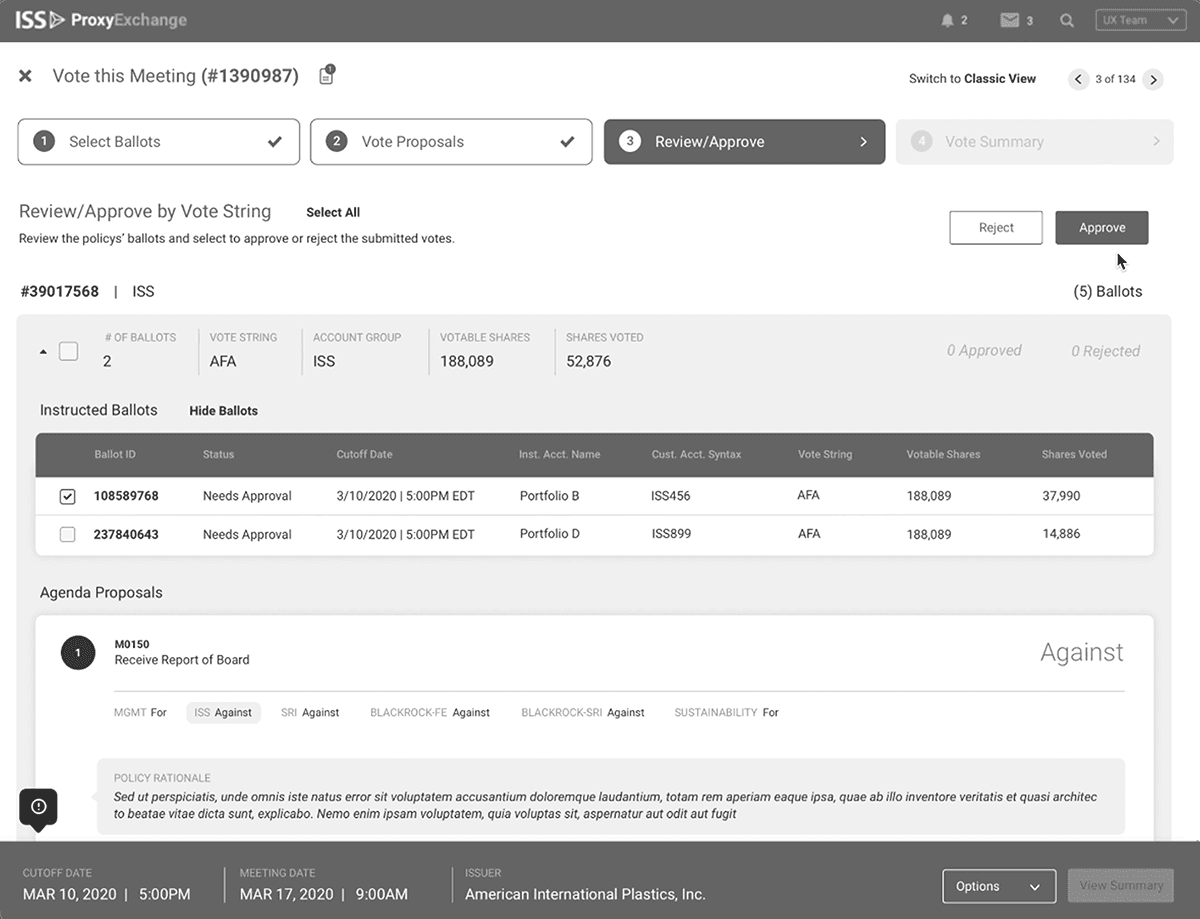
Key screens from the redesign where I explored ways to simplify navigation, maximize space, improve visual hierarchy, reduce redundancy and cognitive load, and streamline the overall voting workflow.
I established a scalable foundation for a modernized proxy voting platform designed to make complex voting tasks more intuitive, efficient, and confidence-inspiring. I also built a robust end-to-end prototype that brought the proposed experience to life, allowing stakeholders to experience the new workflows, align around the vision, and better understand the investment required. While the project was ultimately descoped due to engineering capacity and competing priorities, the work was well received by stakeholders and provided leadership with a clear vision for the platform's future direction. The proposed redesign demonstrated opportunities to improve workflow efficiency, reduce user error, and decrease downstream client support needs, while giving the team a strong foundation and roadmap for future investment.